7 ways to raise your restaurant's average check
Photos, descriptions, placement, upsells: the menu-engineering levers that lift the average check — and how a QR menu switches them on effortlessly.
To raise a restaurant's average check, work on the menu rather than the prices: a photo on high-margin dishes, descriptions that tempt, profitable dishes placed at the top of their category, and a side or drink suggestion at the moment of choice. A QR menu switches these levers on without reprinting anything.
Winning one extra euro per cover doesn't show at a single table. Multiplied by a hundred covers a day, it's a hundred euros; over a month, several thousand. The average check is the quietest and most profitable lever a restaurant has, because it costs neither one more guest to bring in nor one more square metre of dining room. Here are seven ways to lift it, all of them switchable on from a QR menu.
1. Photos on your high-margin dishes
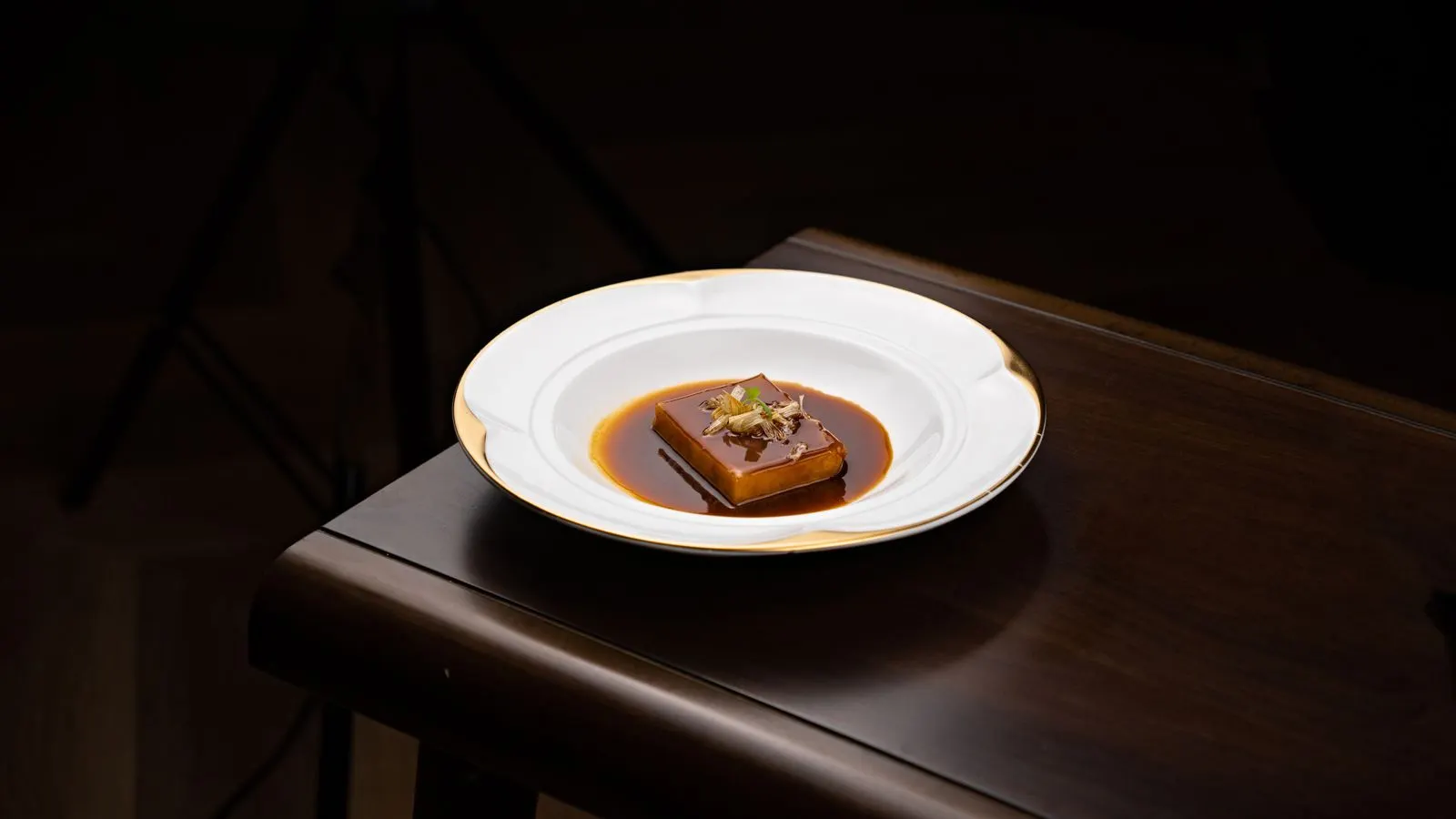
An appetising photo makes people order the dish it shows more often. So save your photos for the dishes you most want to sell: the ones with the healthiest margin, not necessarily the priciest. On a paper card, adding photos bloats the layout and costs a fortune to print; on a QR menu every dish can carry its photo without compromise, and you swap them as the seasons change.
2. Descriptions that make mouths water
'Burger' sells less than 'aged-beef burger, matured cheddar and house-caramelised onions'. Name the origin, the cooking method, the house-made touch: a few concrete words turn a line into a promise. A good description also justifies the price and cuts hesitation. A QR menu lets you write as much as you need, without the space constraint of a printed card.
3. Put your profitable dishes at the top
The eye reads the top of each category first and returns to it at the end. Those are the golden spots: put your most profitable dishes and your signature there, not just alphabetical order or the order they occurred to you. On a QR menu, reordering a category takes seconds with drag-and-drop — you can test an order, watch what gets ordered, and adjust.
4. Suggest sides and drinks
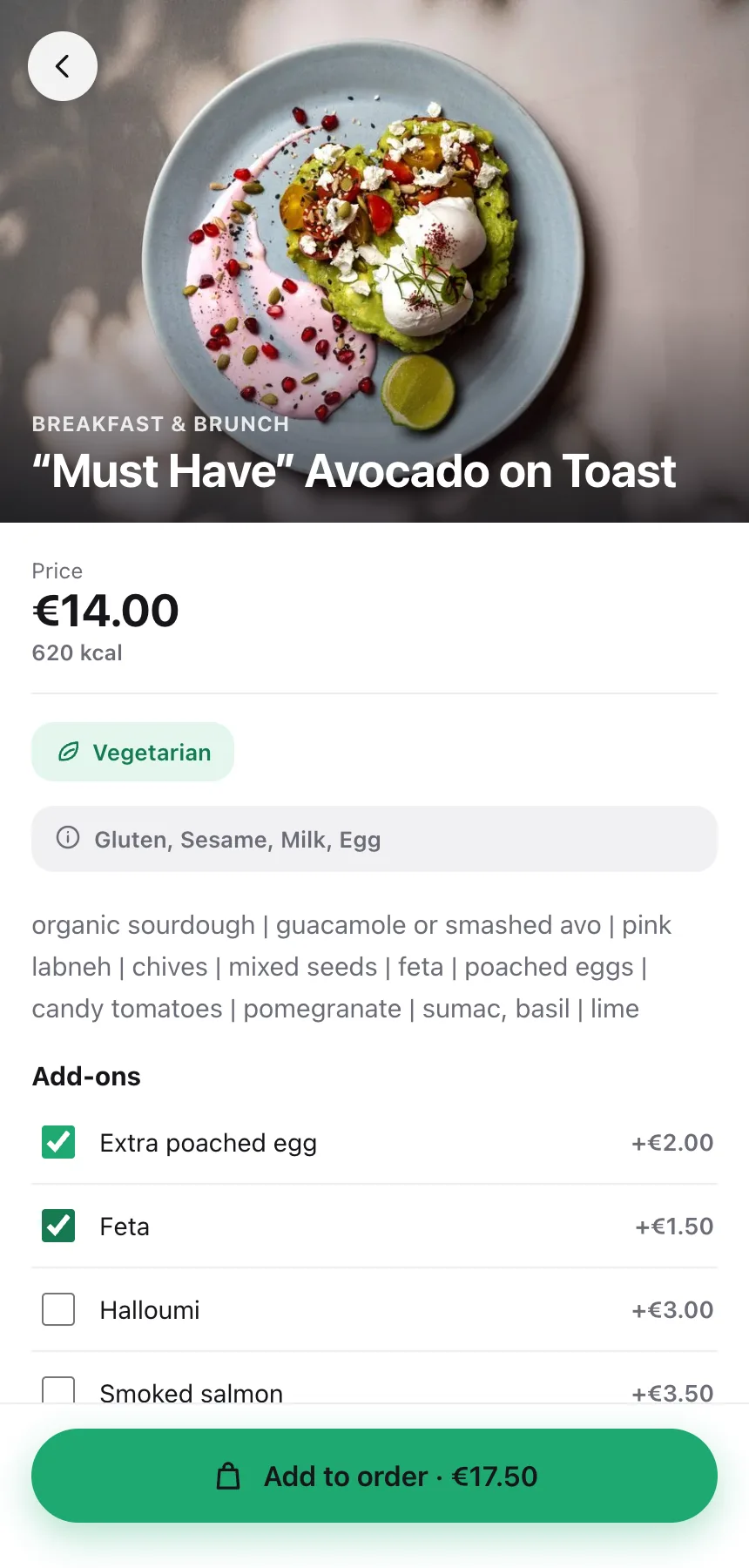
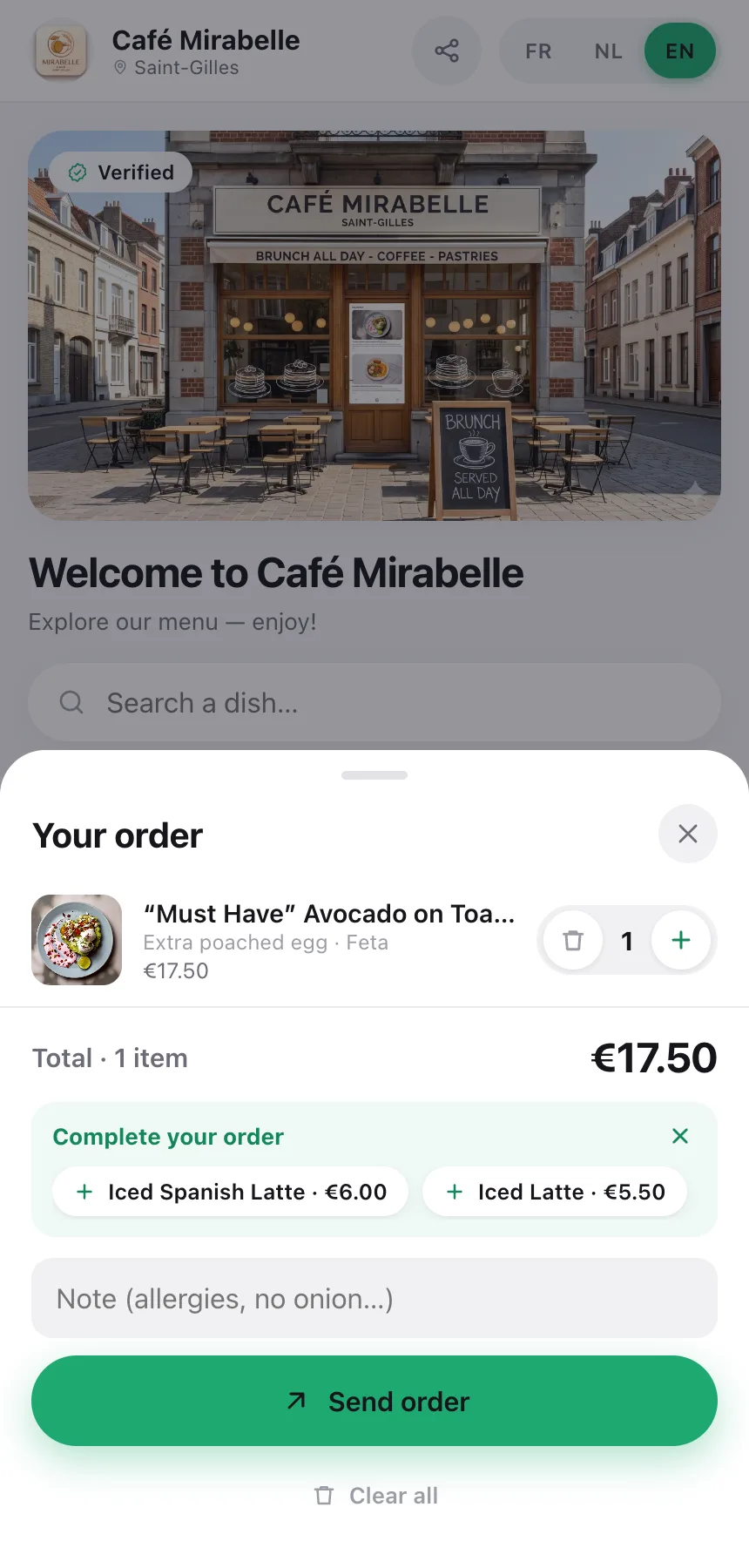
The biggest pool of average check sits around the dish: a sauce, a topping, a matched glass of wine, a coffee. Staff don't always have time to suggest, but the menu can, at every table. Highlight pairings and add-ons at the moment of choice — a discreet 'which wine?' prompt is often worth a few euros more per cover.
5. Spotlight your signature dish
Every house has a dish it's proud of, one that sums it up. Give it special treatment: a spotlight at the top of the menu, a beautiful photo, a description that tells its story. An undecided guest is reassured by ordering 'the thing the house is known for', and you sell a dish you make perfectly. A QR menu lets you pin that dish right at the top, visible the moment it opens.
6. Offer dessert at the right moment
Many guests skip dessert not for lack of desire, but because nobody offered it at the right instant. The QR menu stays in the guest's hand: at the end of the meal they reopen it, and an appetising dessert section — with photos — turns a 'no thanks' into 'go on, let's share a fondant'. Dessert and coffee are often the highest-margin items on the menu.
7. Translate for foreign guests
A guest who can't read the menu orders cautiously: a dish they recognise, a glass of water, and off they go. A guest who reads the menu in their own language explores, is tempted by the signature dish and takes dessert. In Belgium, in tourist areas of France and in the Netherlands, automatic translation into French, Dutch and English directly lifts the check of foreign visitors — you write the menu once, everyone reads it in their language.
The real advantage of a QR menu across these seven levers is that you're not working blind. Analytics show you the most-viewed dishes, the ones people look at without ordering, the effect of a new photo or a new order. You test, you measure, you keep what works — and the average check climbs, week after week.
Frequently asked questions
- Do photos really increase sales?
- Yes. A dish with an appetising photo is ordered noticeably more than a plain line of text. It's one of the simplest and most effective levers on a menu.
- What is menu engineering?
- It's the craft of arranging, describing and pricing your dishes to guide the guest's choice toward the most profitable items, without ever pushing — just by presenting them better.