
Paper menu or QR menu: the honest comparison for your restaurant
Cost, languages, updates, guest experience: what a QR menu does better than paper, where paper still wins, and why the two work together.
Paper menu or QR menu: paper stays nicer to browse at the table and needs no network, while a QR menu can be corrected live, reads in several languages and shows photos and allergens with no space limit. Most restaurants keep a few paper copies and let the QR carry price changes and daily specials.
Should you ditch the paper menu? Not necessarily. But now that QR menus have gone mainstream, paper alone costs you in reprints and missed opportunities. Here is the comparison, point by point.
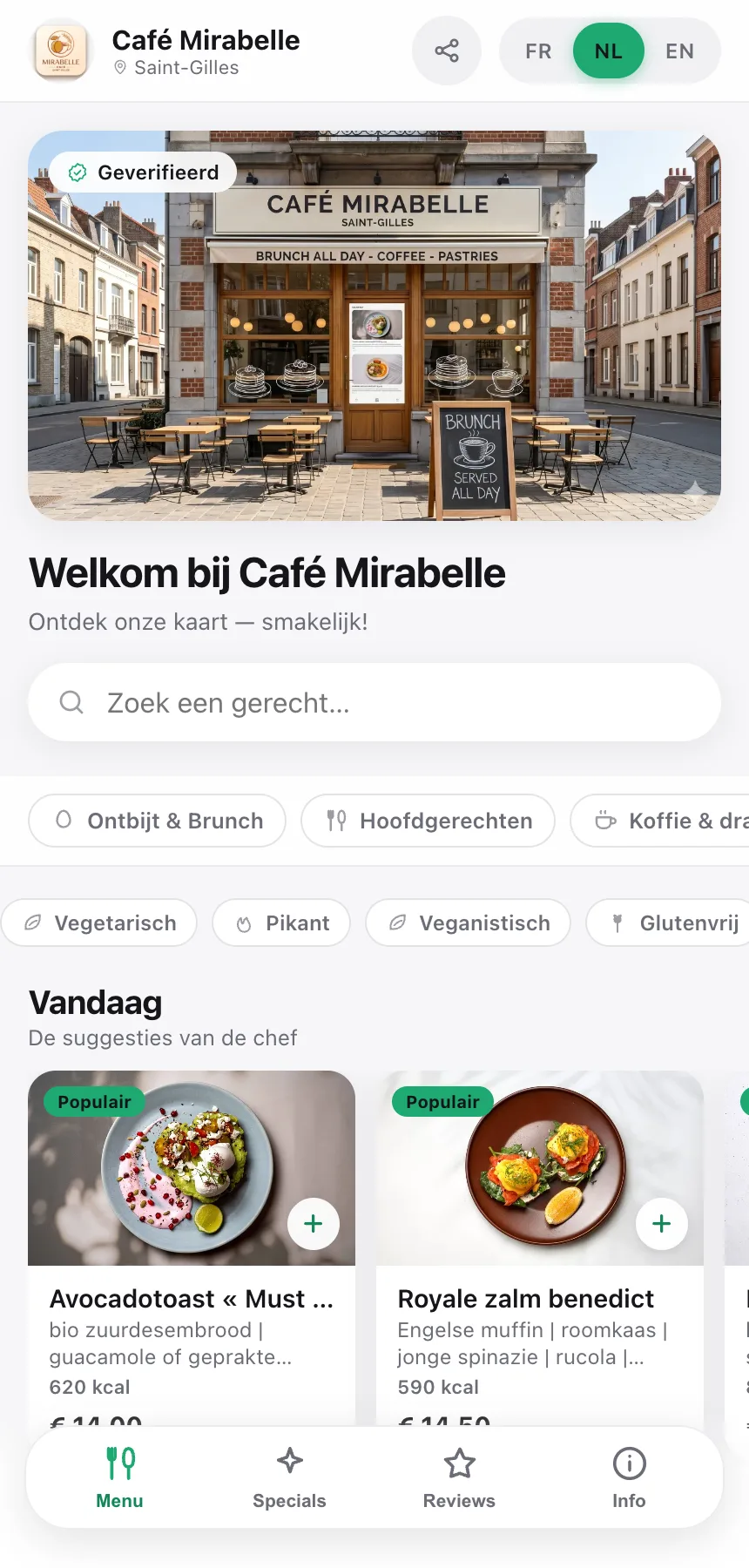
Where the QR menu wins
- Updates: a price, a sold-out dish, a daily special — edited live, online instantly, zero reprinting.
- Languages: automatic FR · NL · EN translation; every guest reads in their own language — decisive in Belgium and tourist areas.
- Photos: impractical on paper without cluttering the card; on a QR menu they sell the dishes that have them.
- Allergens: ticked per dish, displayed cleanly, always current — EU compliance without a separate chart.
- Ordering: at the table or takeaway, sent straight to the kitchen — paper will never take an order.
- Data: views, scans, most-viewed dishes; paper teaches you nothing.
Where paper keeps the edge
A beautiful printed menu is still a piece of hospitality: it sets the house's identity and needs no phone or battery. Some guests — and some services, like a fine-dining tasting — prefer paper. It also remains the natural fallback for guests without a smartphone.
The right answer: both
Most winning restaurants keep a few elegant paper menus and put the QR on every table. Paper welcomes; the QR translates, shows photos, takes orders and stays current. You reprint the paper once a season instead of once a week.